Reptile Awareness Day: meet the scaly residents of Intaka Island
Reptile Awareness Day: meet the scaly residents of Intaka Island
Tucked into the fynbos, basking on the banks and hiding in burrows, Intaka Island’s reptiles are some of the reserve’s quietest residents. Many visitors walk right past them without ever knowing they were there.

Reptile Awareness Day falls on 21 October and it gives us a good reason to look a little closer at the animals that share the island with our birds. Our species list counts 39 reptiles, from a chameleon that blends into the leaves to snakes that keep rodent numbers in check. Let’s meet a few of them.

Who lives here

Intaka’s reptiles fall into three groups. Twelve of the 39 species on our list have also been photographed by visitors and logged on iNaturalist, which helps us keep track of who is still around.

Group

Species on our list

A few you might see

Snakes

18

Mole Snake, Spotted Skaapsteker, Boomslang, Cape Cobra, Herald Snake

Lizards (skinks, geckos, chameleons and others)

16

Cape Dwarf Chameleon, Cape Skink, Marbled Leaf-toed Gecko, Cape Dwarf Gecko

Tortoises and terrapins

5

Angulate Tortoise, Leopard Tortoise, Cape Terrapin

Take a look at our full list HERE 

Photograph by Lorraine Bosch

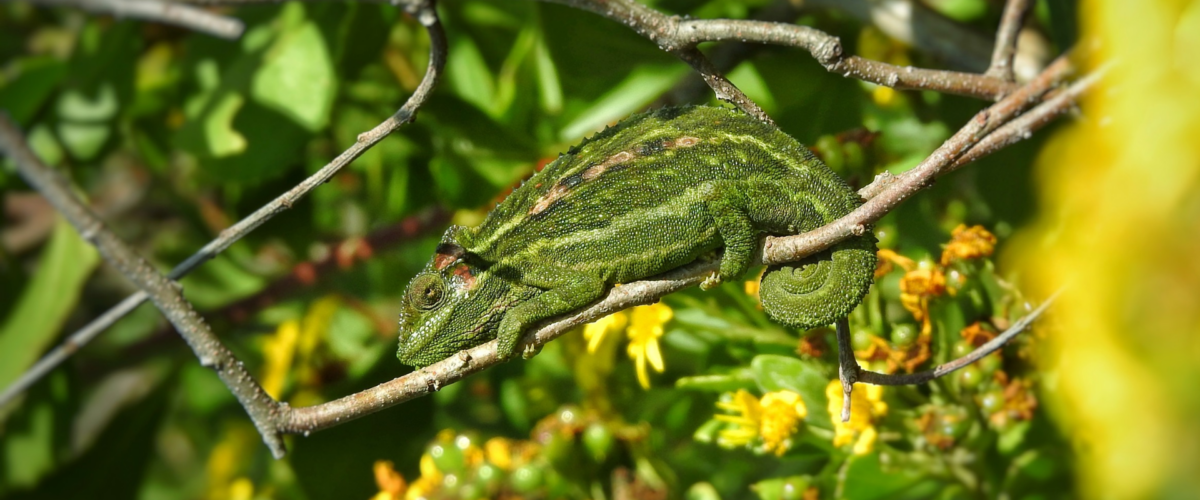
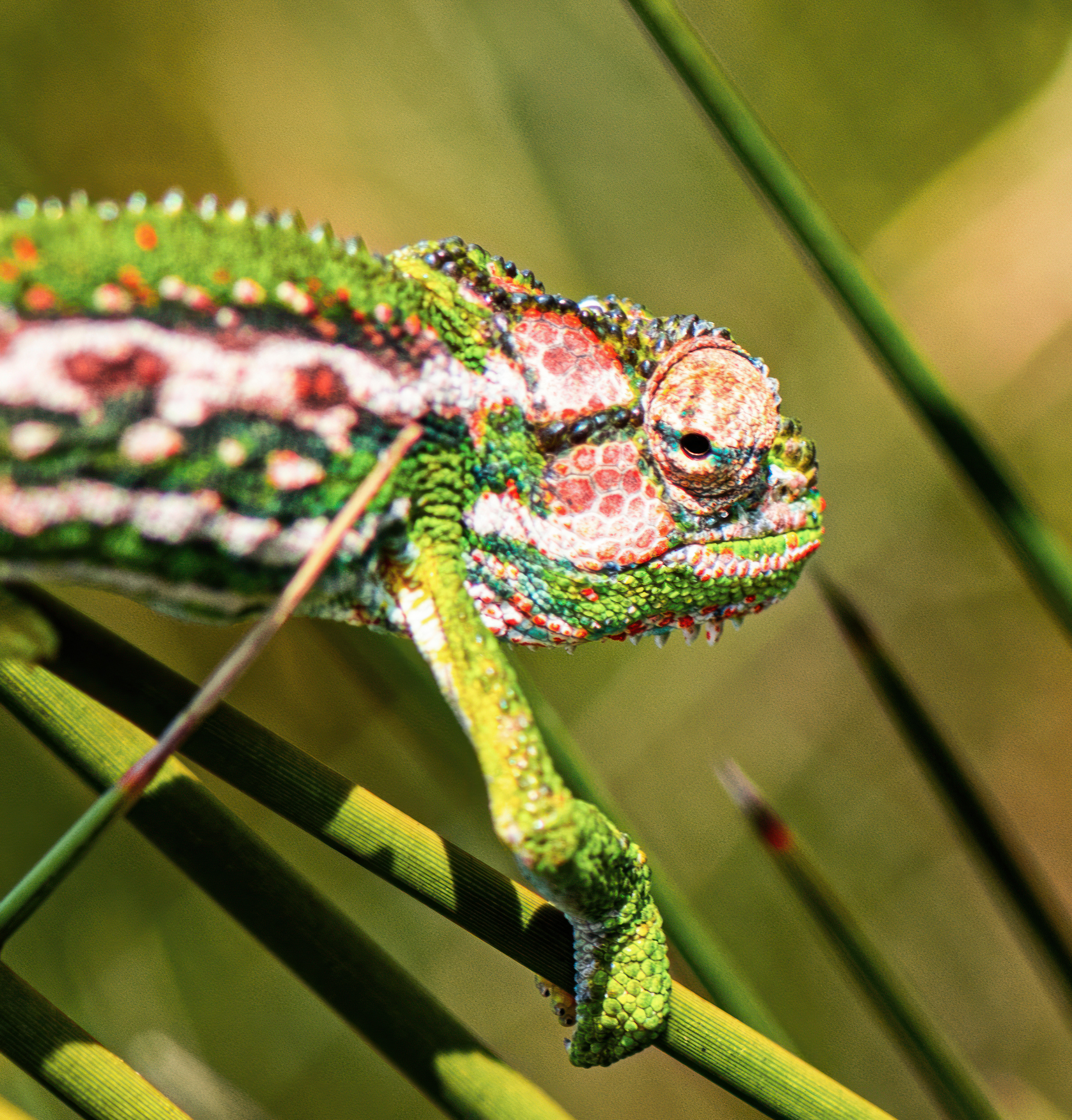
The Cape Dwarf Chameleon: our colourful gem

If you have read our earlier post on the Cape Dwarf Chameleon, you will know it holds a special place on the island. This little lizard is found only in the south-western Cape, from Cape Town to De Hoop, and is listed as Near Threatened by the IUCN.

It hunts the patient way, creeping slowly along a branch before snatching an insect with its lightning-fast tongue. When it is thirsty, it simply licks dew and raindrops off the leaves. Unlike most reptiles, it gives birth to live young, usually between 5 and 15 at a time, and the babies are ready to fend for themselves from day one (SANBI).

Habitat loss, fire and the illegal pet trade all put pressure on this species. If you spot one on your walk, count yourself lucky, and leave it right where it is.

Photograph by Frances Du Toit

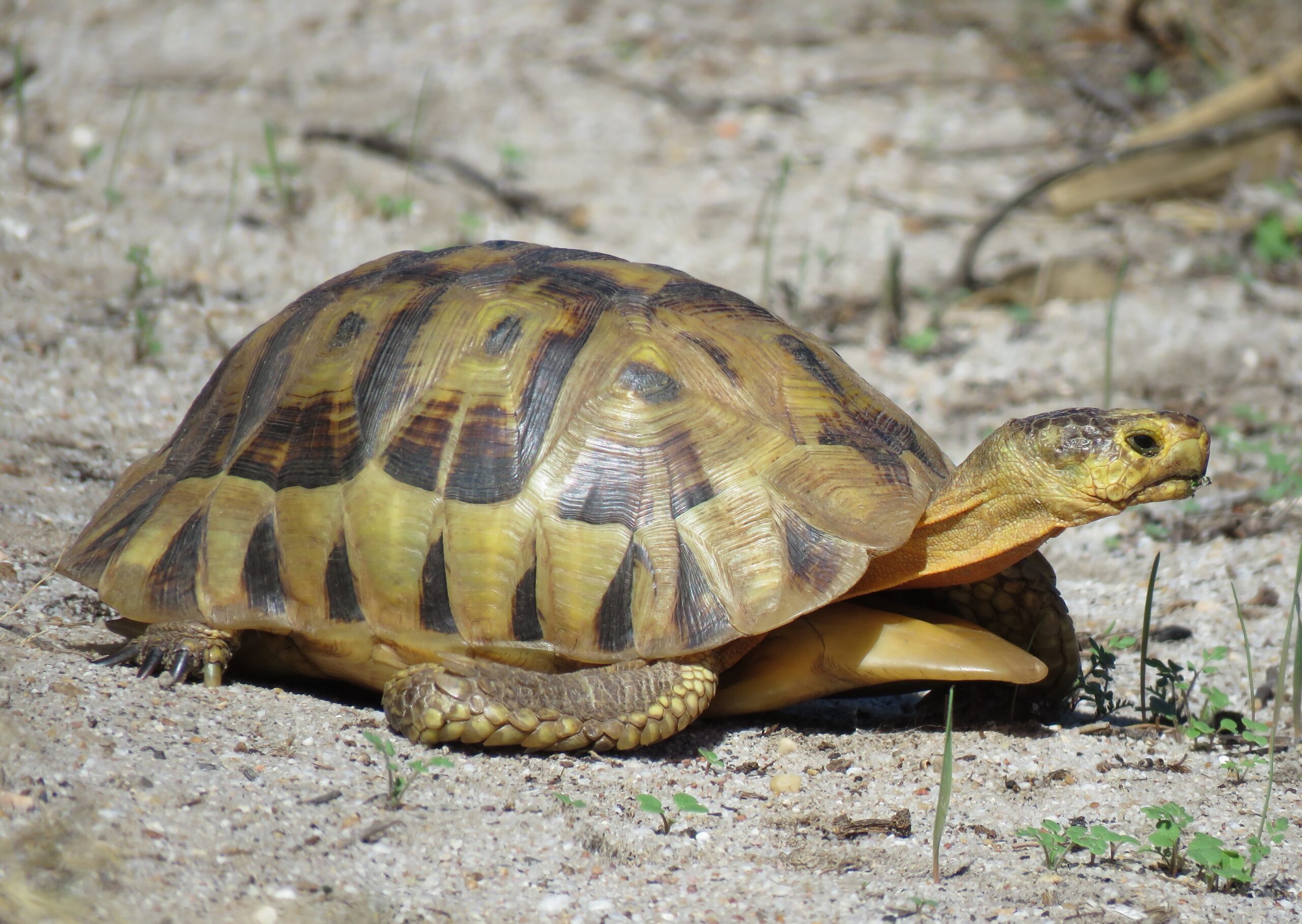
Tortoises and terrapins: slow and steady

On one spring walk we spotted an Angulate Tortoise on the salt pans, making its way between the wildflowers. Locally it is known as the rooipens skilpad, or red-belly tortoise, and it is the only member of its genus. Its mating season runs from September to April, so keep an eye on the paths over the coming months.

The Leopard Tortoise and the Cape Terrapin are on our list too. Terrapins spend much of their time in and around the water, so scan the banks for one warming up in the sun.

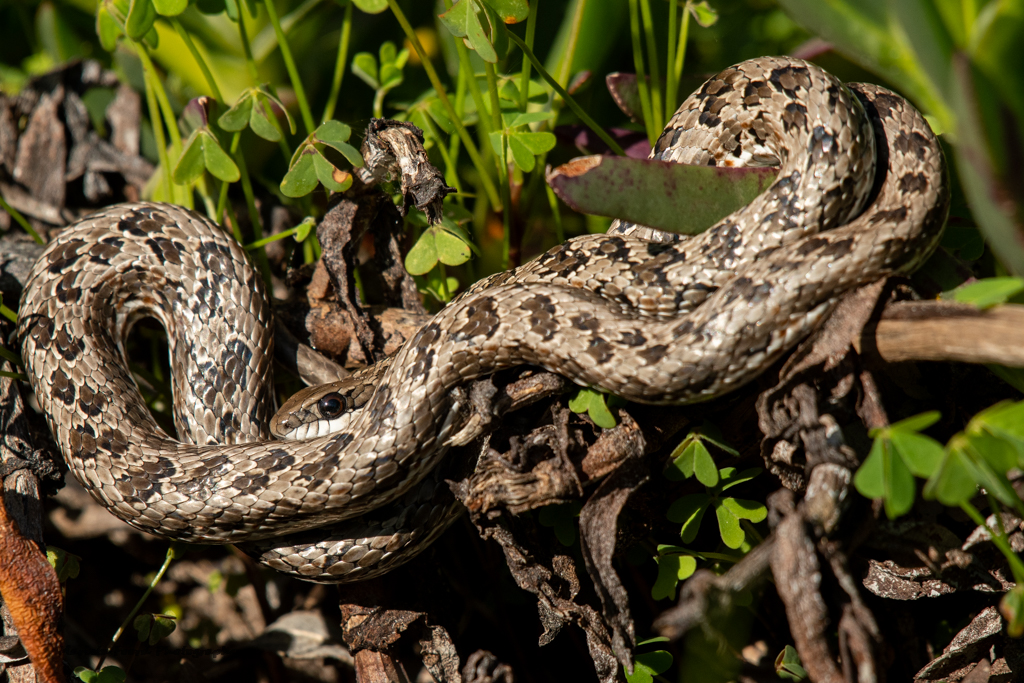
Spotted Skaapsteker

Snakes: more helpful than harmful

Snakes often get a bad name, but most of the 18 species on our list are harmless or only mildly venomous. They also do important work on the reserve, keeping rats and mice in check and, in turn, becoming food for birds and larger mammals. Here are a few you could come across:

  • Mole Snake: a strong, muscular snake that isn’t venomous, though it does have sharp teeth. It spends much of its time in rodent burrows, searching for its next meal (African Snakebite Institute).
  • Spotted Skaapsteker: also known as the Rhombic Skaapsteker. Our rangers have seen this harmless snake on the island.
  • Rhombic Egg Eater: a harmless snake that eats nothing but birds’ eggs. When it feels threatened, it rubs its rough scales together to make a hissing sound, putting on quite a show for such a gentle animal (African Snakebite Institute).
  • Boomslang: highly venomous, but shy and very unlikely to bite. It spends most of its time in trees. Cape males are usually black on top, with green, yellow or orange sides (African Snakebite Institute).
  • Cape Cobra: highly venomous, and one to admire from a very safe distance.

Lizards and geckos: the quick ones

Our 16 lizard species are easy to miss. Skinks like the Cape Skink and Red-sided Skink dart across sunny paths and rocks, often gone before you can reach for your phone. Geckos like the Cape Dwarf Gecko and Marbled Leaf-toed Gecko cling to walls, rocks and tree trunks. Then there are the ones you will almost never see, like the Cape Legless Skink, which lives most of its life underground.

If you meet a snake

Warmer days bring our reptiles out to bask and feed, so you are more likely to cross paths with a snake over the coming months. If you do, on the island or anywhere in Century City:

  • Don’t move closer. If it is about a metre away, stand still. It will usually look for its own way out.
  • If you are very close, move away quickly. If it seems cornered, back away slowly.
  • Never try to catch, injure or kill it.
  • If a snake is a risk at a home or business, call the Century City SOC on 021 202 1000. We will call a qualified snake catcher that will relocate it safely.

How you can help on Reptile Awareness Day

  • Look, but don’t touch: admire chameleons, tortoises and other reptiles from a respectful distance, and leave them where you find them.
  • Stay on the paths: many of our reptiles live in the plants and soil right beside them.
  • Share your sightings: photograph what you see and upload it to iNaturalist. Every record helps us keep our species list up to date.

So this Reptile Awareness Day, take a slow walk around the island, look a little closer, and see how many of our scaly neighbours you can find.

Join our Reptile Full Moon Hike

Join us at Intaka Island for an exciting Reptile Hike Full Moon and venture into the wetlands after dark to discover the creatures that come alive beneath the moonlight.

Explore the island under the glow of the full moon, keeping watch for reptiles and other nocturnal wildlife hiding in the shadows. From scaly residents to mysterious creatures moving through the darkness, you never know what you might spot along the way!

Discover the fascinating reptiles that call the wetlands home and learn how they survive, hunt, hide and navigate their nighttime world. Our rangers will share fascinating facts about local species, their habitats and the important role reptiles play in keeping our ecosystems healthy.

Listen for movement in the reeds, scan the pathways with your torch and keep your eyes peeled for unexpected encounters as Intaka reveals its nighttime secrets.

With the full moon overhead and the sounds of the wetlands all around you, this is a unique opportunity to experience Intaka Island in a completely different way.

Are you ready to explore after dark? Bring your sense of adventure and join us for an unforgettable evening of reptiles, wildlife and moonlit discovery!

Event Details

Date: Tuesday, 24 November 2026

Theme: Reptiles

Venue: Intaka Island, Century City

Time: 18:30 – 21:00

Cost: R140 per person – Includes a drink and sweet treat

Kids Club members receive 20% off. Email info@intaka.co.za for your special promo code.

Book your tickets HERE

Sources

Shanely Alexander
Thumbnail

Previous Post
DigiOutreach makes...