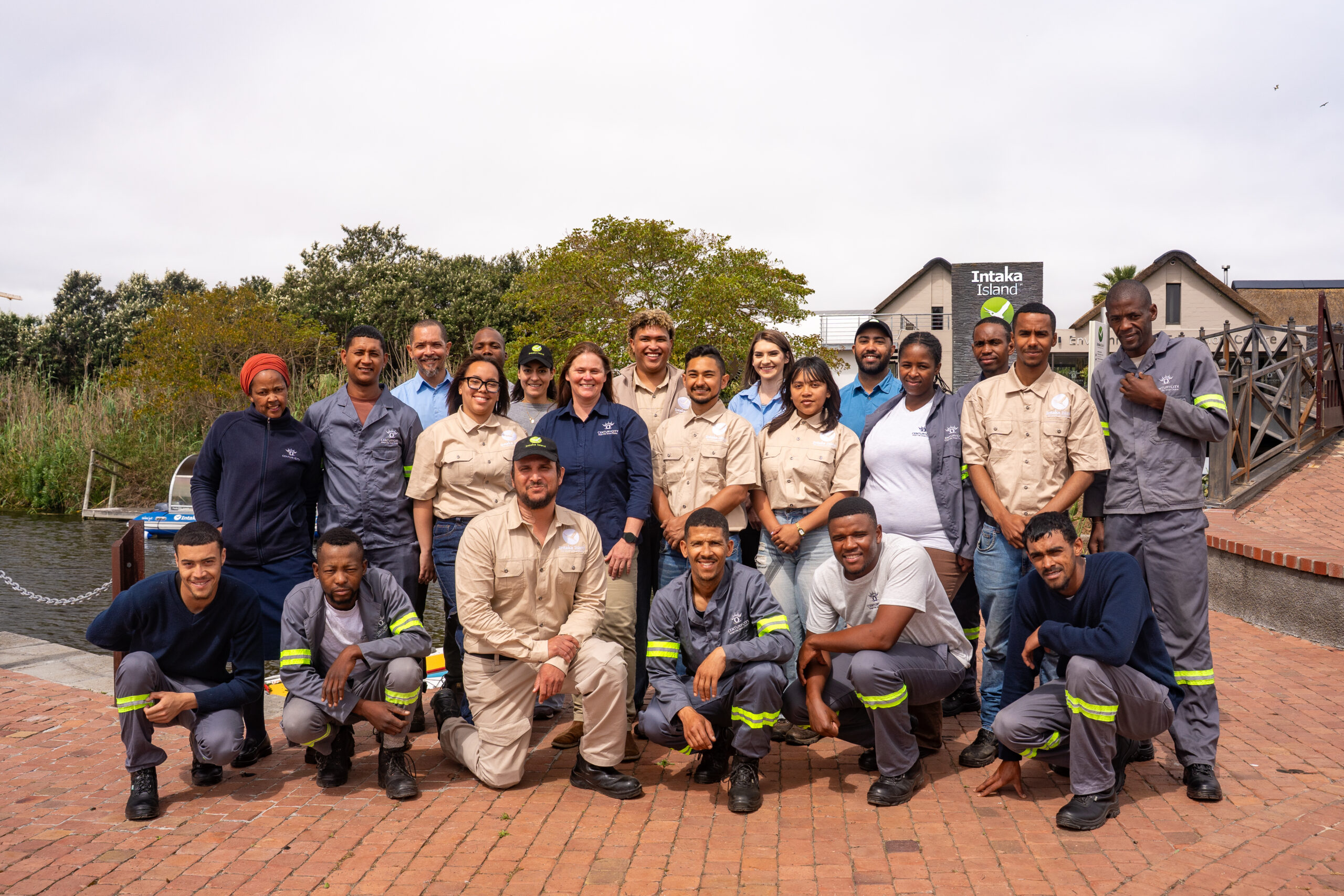
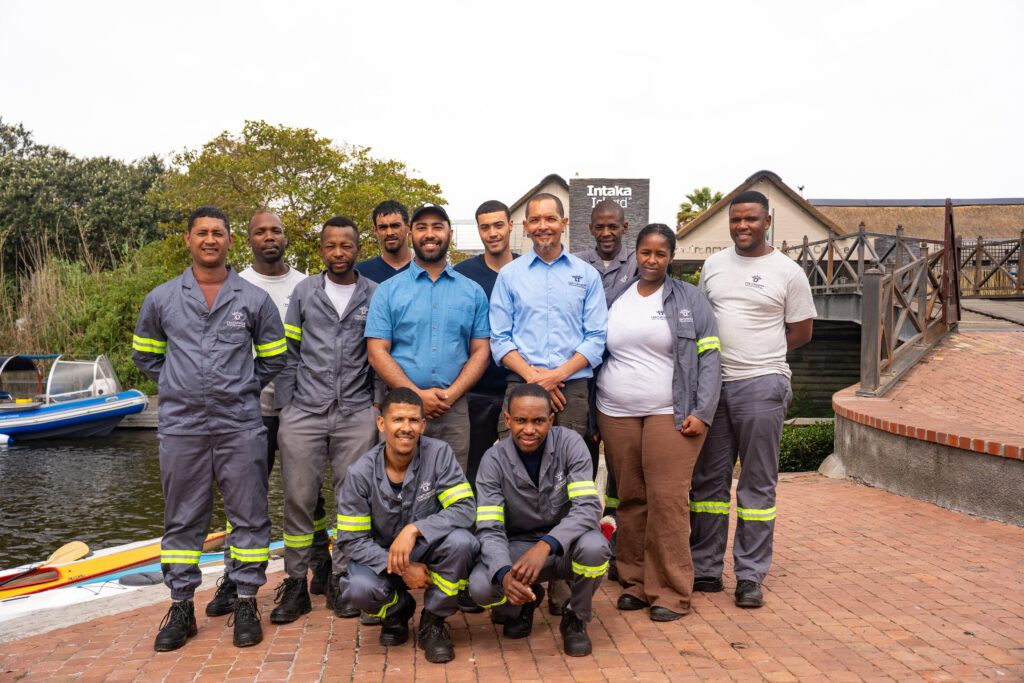
The Intaka Island Eco Centre is overseen by the Intaka Island Environmental Trust. Both the Eco Centre and Nature Reserve are managed by the Century City Property Owners’ Association. Environmental, Horticultural & Sporting Codes Division are headed up by Ms Louise de Roubaix.
INTAKA ECO CENTRE
The Intaka Island ECO CENTRE’s day-to-day operations are managed by our Eco Centre Manager, McKyla Britz, and a team of 9 staff members, who are responsible for ensuring we provide a world-class Eco Tourism facility to our over 35 000 local and international visitors. The team of qualified rangers run a full-time environmental education programme ranging from foundation to further education& training level, to over 170 Western Cape schools. The Eco Centre has three venues (Lapa, Activity Centre & Energy Cube) managed by the team and available for hire for both private and corporate functions. We frequently host events such as the Winter Night Market, Fathers’ Day sleepover, Full moon hikes and other awareness days linked to an annual environmental calendar.
Her team consists of two Eco Centre Assistants, Mr Ethan Barnes and Mr Freddie Vaas who has recently joined the team. Ms Melissa February is our friendly office administrator & receptionist who welcomes visitors, and deals with all requests, enquiries and bookings for Intaka.
The team also consists of five rangers/skippers, who are all trained to present educational programmes, guided walks, boat trips and assist with general day-to-day maintenance on Intaka island nature reserve and at the Eco Centre. Our cleaning lady makes sure all our facilities and venues are in tip top shape for visitors and clients.
Intaka Island Nature Conservation & Waste Management
The Intaka Island nature reserve’s day-to-day operations are managed by our Nature Conservation Officer and a team of 6 staff members, who are responsible for implementing conservation programmes on the island. These include fire management, alien vegetation clearing, data collection and monitoring programmes such as fish surveys, bird monitoring, water quality monitoring, camera trapping, fixed photo plot monitoring, etc. They also assist facilitate animal rescues & rehabilitation in the precinct. The team looks after all the island’s visitor infrastructures like our two bird hides, pathways, and cells of the wetland. Did you know Intaka also has its very own nursery. The nursery provides in-house plants to both the Intaka fynbos restoration and the precinct horticultural planting programmes. Fynbos plants are used for our active vegetation restoration through planting and seed sowing.
The Conservation team also oversee Waste Management for the precinct, which includes the two recycle rooms at Central Park, Recycle drop-off-site for residential general waste and our in-house waste tip site for general-, garden- and aquatic waste.
The team consists of two general workers responsible for all maintenance and conservation work on the island and two nursery assistants who oversee the propagation and planting programmes at our in-house nursery.
Canal Maintenance
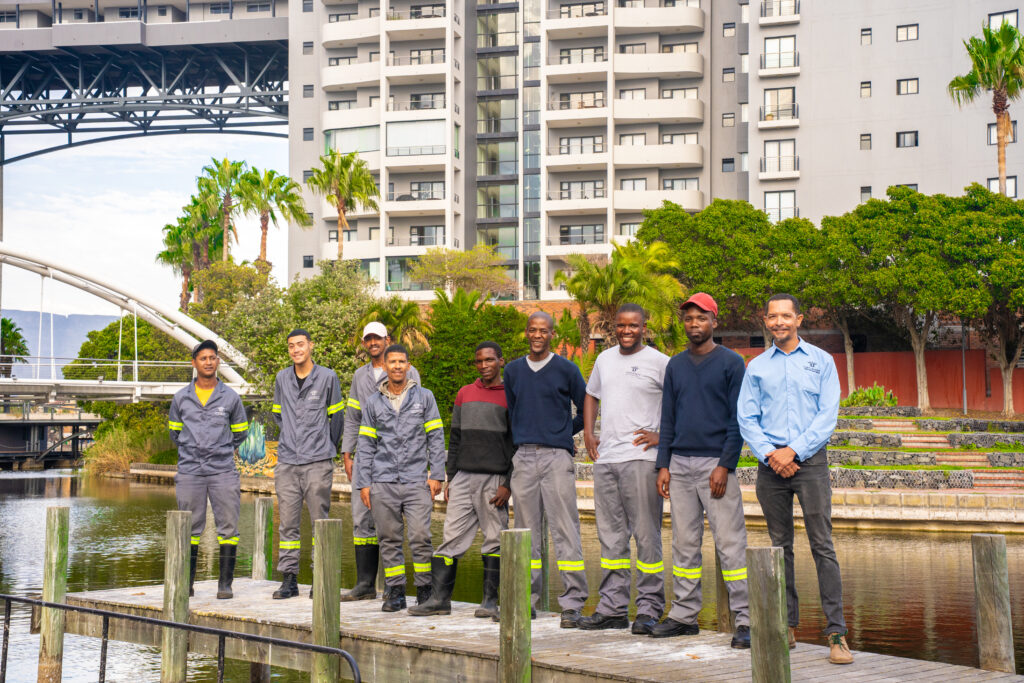
A separate team exists purely to keep Century City’s 8.5 kilometres of canals and water features functioning, work that happens largely out of sight but affects every part of the precinct downstream. Led by a Canal Maintenance Supervisor reporting into the Environmental and Horticulture division, the team operates and maintains the aquatic plant harvesters used to control weed growth in the canals, keeping waterways litter-free, open, and clear of both aquatic weeds and encroaching terrestrial vegetation.
The work is methodical and constant: daily harvesting runs are logged in detail, loads, areas covered, fuel and oil consumption, alongside any water quality interventions, with monthly reports submitted and any equipment defects flagged immediately. Preventative maintenance checks on the harvesters and skiffs happen daily, down to greasing fittings, checking oil and hydraulic fluid levels, and inspecting conveyor belts and bearings, keeping the equipment itself running as reliably as the canals it maintains.
It’s unglamorous work, mechanical, repetitive, and easy to overlook, but it’s also the reason the canal system actually functions as the water-polishing and circulation network it was designed to be. Without it, the wetland’s own water quality work would have nowhere to flow.